In your mind
- Hypervigilance: always braced for the next attack
- Replaying decisions, and what you might have caught sooner
- A nagging sense of guilt
- Anxiety that can build into panic attacks
- Low mood that can deepen into depression

For CISOs and CSOs
When an attack puts billions of dollars, the company's future, people's livelihoods and your own reputation at stake, and seconds and minutes count, the CISO makes the call and carries it. PostIncident is building a confidential community that connects the security leaders who carry that weight with peers and vetted experts who understand the work, during the incident and long after.
Our mission
No security leader should carry an attack alone. Not in the first hour, not in the months after, and not at home.
When an organization is attacked, someone has to stand in the middle of it. They make the calls with half the facts, knowing the company's future and the livelihoods of the people who work there may depend on them. They keep the business running, answer to the board, the regulators and the press, and protect people who may never know their name. It is demanding work, and the people who do it take pride in it.
Recovery is part of that job. PostIncident is building a confidential place to do it: conversations with peers who have led through a major incident themselves, connections to vetted experts, including clinicians experienced in trauma, support for the families who lived it alongside them, and a community that treats caring for yourself and your people as part of being ready for the next one.
We will listen first. We will keep it confidential. We will stay for the long after.
01 The issue
The people who come for your organization don't keep office hours. They need no warrant, no budget, no change ticket and no board vote. They cross borders freely, and they need to succeed only once.
You keep every rule. You answer to the law, regulators, auditors, insurers, customers and your board, and every step you take may be reviewed later. A U.S. public company has four business days, from the moment it decides an incident is material, to disclose it to investors.8 The adversary has no deadline.
And not every attack comes through a network. For a chief security officer it can be a threat against an executive, violence at a site, or someone on the property who means harm. The same weight lands on the same desk.

02 Time
An incident compresses time. The decisions that matter most come in the first minutes and hours, with the least information, and many of them fall to the CISO.
Every minute you wait costs something. So does every minute you act without knowing. The company's revenue, its reputation, its future and sometimes public safety can depend on calls you make before the facts are in, and you carry them afterward, whichever way they went.

A Colonial Pipeline operator saw a ransom note at about 5:00 a.m. By 6:10 a.m. the entire 5,500-mile pipeline, which carries nearly half the East Coast's fuel, had been shut down.
INL case study; Reuters67Total worldwide damage from the 2017 NotPetya attack, according to a White House assessment. Maersk alone put its cost at $250 million to $300 million.
WIRED; BleepingComputer109UnitedHealth Group's total 2024 cost from the cyberattack on its Change Healthcare unit, including $2.2 billion in direct response costs.
UnitedHealth Group 2024 results1303 Responsibility
You are accountable for things you don't fully control: every click, every vendor, every forgotten account. Security leaders take that on knowingly. It is the job.
Its revenue, its operations and its future. Researchers have found that ransomware losses can threaten an organization's survival.14
Employees whose livelihoods depend on the company coming through, colleagues whose data was taken, customers who trusted you, the team you asked to work through the night and, for a CSO, people's physical safety.
Your reputation is tied to calls made with incomplete facts, and liability is increasingly personal. In one U.K. survey, 42% of security decision-makers said they felt a breach was inevitable and didn't want it to tarnish their career.15
04 Duration
A major incident runs for weeks and months, not a single day. Leading well means pacing yourself and your team for the whole of it. At every stage there are calls that fall to you, a cost you carry, and consequences that last.

It comes at an hour nobody picks. At Maersk, the first call came at 4 a.m.10 Soon you are briefing the CEO on what you know, which isn't much yet, and making the first decisions anyway.
Shut systems down and stop the business, or keep it running and risk the spread. You decide in minutes, with almost nothing confirmed, while the CEO and the board wait on your word. Even the right call has a cost: shutting down can stop revenue the moment systems go dark, and the second-guessing that starts here can stay with you long after the incident ends.
You become the point where everything meets: lawyers, forensic teams, insurers, regulators, law enforcement and the board. You tell your family not to expect you home. Sleep comes in pieces, and every update you give is weighed.
Pay or refuse, disclose now or wait, who hears first, whether to call in law enforcement: every call has a clock on it, and a U.S. public company has four business days to disclose once it decides an incident is material.8 Attackers can draw attention to stolen data through social media or by contacting journalists,14 so your decisions may play out in public, with customers' data and employees' livelihoods riding on them. All eyes are on you, and you stay the steadiest voice in the room, often the most tired one.
You set the pace for a team working at its limit, and you carry their exhaustion along with your own. Maersk rebuilt 4,000 servers and 45,000 PCs in ten days.9 Some of its staff kept working day and night for close to two months.10
Restore too early and the attacker may still be inside. Restore too late and the losses keep mounting: MGM Resorts estimated a roughly $100 million hit to one quarter's results after a roughly ten-day shutdown.1112 The pressure to bring everything back at once lands on you, and you run on reserves while making sure your team doesn't.
Notifications, lawsuits, audits and the post-mortem, where your decisions are reviewed with the benefit of hindsight.
Calls you made in minutes are examined for months by the board, regulators and sometimes the courts, and in one U.K. study of ransomware victims, dealing with a data regulator could stretch to a year or more.4 One victim told researchers, "you second guess yourself, [and] that adds to the mental anxiety," and the same study found that incidents have cost some people their jobs.14 In one U.K. survey, 42% of security decision-makers felt a breach was inevitable and did not want it to tarnish their career.15
The systems are restored. Your own recovery doesn't end there: sleep, perspective and a debrief that covers the leader and the team as well as the technology.
When the systems come back, the adrenaline drains, the exhaustion arrives, and sleep may not return on its own. Studies of post-traumatic stress find it can persist for years in some people,18 and in one ransomware case the pressure on staff was heavy enough that their company hired a PTSD support team.14 Taking care of yourself now is part of being ready for the next one.
05 The cost
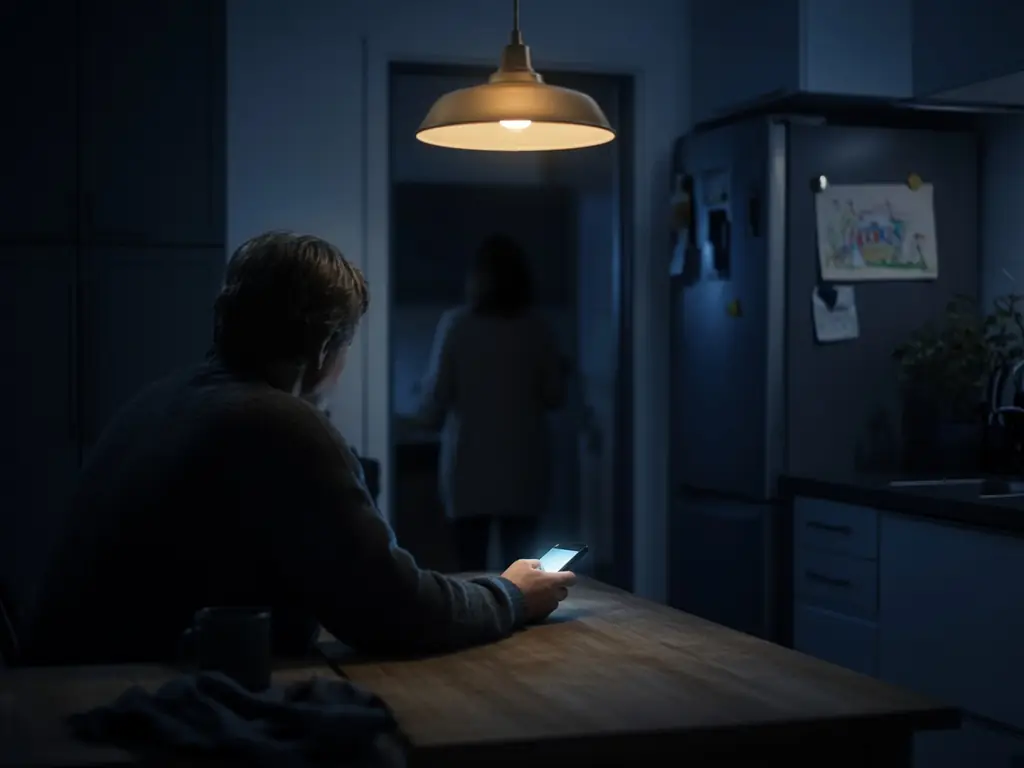
Carrying decisions of that size takes a toll on the mind, the body and the home. It often starts as what looks like ordinary stress. Left alone, it can deepen over time into something far heavier. Knowing the signs is part of being ready.
During the incident
Long hours, broken sleep, too much coffee, a short fuse. Normal for a crisis, and usually expected to pass.
In the weeks after
The pressure lifts but sleep doesn't come back. Decisions replay at night. Every alert feels like the start of the next attack.
Later, if it goes unaddressed
For some, it means severe anxiety and panic attacks, depression, guilt and self-blame that won't let go, and insomnia that lasts for months. It can mean withdrawal from family and friends, strain on a marriage, and symptoms of post-traumatic stress.
"Ransomware can ruin lives," concluded researchers who interviewed victims. They found that attacks evoked panic, guilt, shame and self-blame, reached into private and family life and contributed to serious health issues. One company brought in a PTSD support team for its staff.14
Sources: Nominet CISO Stress Report, 2020 (400 CISOs, U.S. and U.K.)1; IBM Security incident responder study, 2022 (1,100+ responders)3. Read what the research says → For families and leaders: what helps →
With respect
Police officers, firefighters and paramedics carry a weight of their own, and it is theirs, not ours. We don't compare.
We have learned from the peer-support communities they built, where people who have been there sit with people going through it, confidentially and without judgment. We are bringing that idea, with respect, to the people who protect organizations.
06 Peer support
The most useful counsel after a major incident often comes from someone who has led through one.
PostIncident is being built on peer support: security leaders who have led through a serious incident, trained to listen and to help others steady themselves. Peer support works alongside professional care. It doesn't replace it.

A confidential conversation with a security leader who has led through a major incident and knows what the weeks after feel like.
Closed groups of a few peers who meet regularly, under strict confidentiality, to talk about what the job doesn't let you say out loud.
The people at home live through the incident too. They will have a space of their own.
Planned check-ins at 30, 90 and 180 days, long after the incident is closed.
What's said will stay with the people in the room. Our full confidentiality policy, including its limits, will be published before anything launches.
Not tied to any employer, vendor or insurer, and never a channel back to your company.
No selling, no recruiting, no lead lists. Ever.
No second-guessing of your decisions. Practical perspective from people who have done the job.
07 The road ahead
PostIncident is being built to last: an independent home where security leaders who need support are connected with the people best placed to provide it.
We plan to organize PostIncident as a nonprofit and to apply for 501(c)(3) status. We want it to stay independent of any employer, vendor or insurer, and a nonprofit structure is the right fit for that.
The goal is to connect each security leader with vetted people who can help with what they're carrying: clinicians experienced in trauma, peers who have led through a major incident, and specialists in the pressures that reach family, work and career.
Every part is being purpose-built for security leaders and the people around them, with confidentiality and careful vetting at the center. Nothing is open yet. We'll launch each piece when it's ready, not before.
If you care about this mission and feel passionate about it, reach out. Let's work together. Clinicians, peers, specialists and anyone else who wants to help build it are welcome.
Get in touch
08 Support
We're developing dedicated, purpose-built support with clinicians and security leaders who understand this work. It isn't ready yet. We are taking the time to get it right.
If you want to know when it opens, help build it, or take part as a peer, write to us.
To keep our inbox safe from spam bots, the address appears after a quick check.
If you are in danger right now, or thinking about harming yourself, contact your local emergency services immediately.
A note from our founder
PostIncident was started by a security leader who believes the people who protect organizations deserve protection too. A personal note will appear here.